

Out-There HealthTech
Connect, Collaborate and Grow
Greater Manchester Universities — Healthcare, Medical Training & HealthTech Research
Greater Manchester is home to a concentration of universities with significant strengths in healthcare, medical training, and health technology research. This guide provides an overview of each institution’s offerings relevant to the healthtech ecosystem, including research centres, courses, facilities, and contact details.

Health Innovation Manchester
Health Innovation Manchester (HInM)
Health Innovation Manchester is the Academic Health Science Network (AHSN) for Greater Manchester. It plays a central coordinating role across all GM universities, NHS trusts, and industry partners, helping to discover, develop, and deploy innovations into the local health and social care system. For healthtech companies, HInM is often the first point of contact for navigating the regional innovation landscape.
- Website: healthinnovationmanchester.com
- Contact: info@healthinnovationmanchester.com
- Address: Citylabs 1.0, Nelson Street, Manchester, M13 9NQ
Manchester Academic Health Science Centre (MAHSC)
A formal partnership between the University of Manchester and NHS partners to accelerate translation of research into clinical improvements.
In April 2020, Manchester Academic Health Science Centre (MAHSC), part of Health Innovation Manchester, was officially designated by National Institute for Health and Care Research (NIHR) and NHS England up to 2025. Find out more about the designation in this news story. The goal for the AHSC was to make new scientific discoveries and shorten the time to turn them into effective treatments to deliver benefits for patients locally and around the world.- Website: mahsc.ac.uk

Manchester Metropolitan University
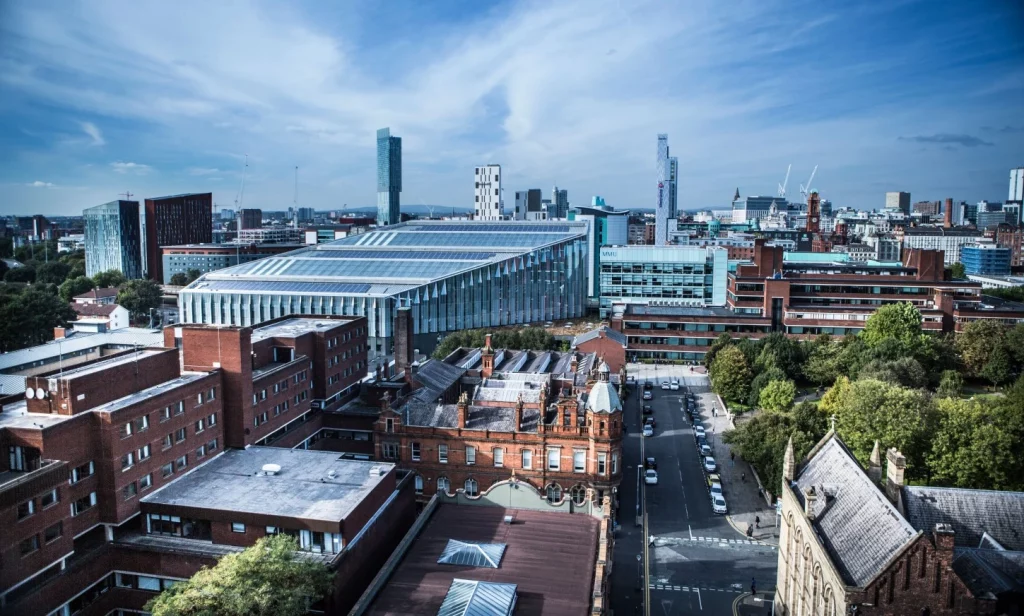
Manchester Metropolitan University (Manchester Met) is one of the UK's largest universities, with around 44,000 students and four faculties (Arts and Humanities; Business and Law; Health and Education; Science and Engineering). The university is Modern University of the Year 2026 (Good University Guide), Gold-rated in the Teaching Excellence Framework, and ranked 7th in England for student experience (NSS 2025). Manchester Met has invested over £400m in its estate since 2015 as part of a major Estates Masterplan.
Department of Health Professions. Within the Faculty of Health and Education, the department offers undergraduate and postgraduate programmes in physiotherapy, nursing and other allied health professions, with placement partnerships across Greater Manchester NHS trusts.
Institute of Sport. Anchored on the £26m refurbishment of 99 Oxford Road (opened 2022), the Manchester Metropolitan University Institute of Sport is a multi-faculty centre of excellence bringing together researchers in musculoskeletal science (Science and Engineering), sports business and policy (Business and Law), and health and exercise (Health and Education). Specialist facilities include a 3 Tesla MRI scanner, x-ray body scanners, an altitude-and-heat environmental chamber, 3D motion capture, bone density analysis, and muscle function laboratories — making it one of the UK's strongest sites for musculoskeletal, sports-medicine and human-performance medtech research.
Healthcare innovation and implementation science. Manchester Met Business School hosts the NIHR Applied Research Collaboration Greater Manchester (ARC-GM) Implementation Science theme, with Professor Roman Kislov as Deputy Theme Lead (overall theme led from the University of Manchester, with ARC-GM PI Professor Dame Nicky Cullum). This research evaluates how research-based innovations are adopted and scaled across the Greater Manchester system, with specific work on the role of Health Innovation Manchester and the wider innovation network — directly relevant to companies seeking to understand NHS adoption pathways in the region.
Relevance for healthtech, medtech and life sciences. Manchester Met is a strong NHS-academic partner for healthtech, medtech and life sciences companies working in: musculoskeletal and sports-medicine devices and diagnostics; assistive and rehabilitation technology; physiotherapy and allied-health digital tools; nursing workforce and digital-care training; ageing and human-movement research (including dementia, diabetes and Parkinson's, supported by Wolfson Foundation funding); and implementation/scale-up research for evaluating health innovation adoption.

NIHR Applied Research Collaboration Greater Manchester
The National Institute for Health and Care Research (NIHR) fund, enable and deliver world-leading health and social care research that improves people\'s health and wellbeing, and promotes economic growth.
A large-scale partnership between universities, NHS providers, and third-sector organisations, ARC-GM is one of 15 networks across England funded by the NIHR. It produces research responding to the needs of local populations and healthcare systems, and is a key mechanism for evaluating health innovations in Greater Manchester.
They are one of 15 ARCs across England, part of an initial £135 million investment over five years by the NIHR to improve the health and care of patients and the public. This five-year investment has been extended by 18 months until 31 March 2026.
Their research activity is pivotal in finding new and evaluating better ways of preventing illness and delivering care, ensuring that Greater Manchester continues to be at the leading edge of health innovation, applied research, care and treatment.
Royal Northern College of Music
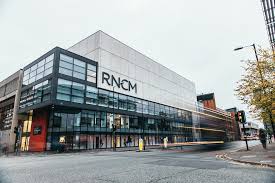
The RNCM provides a unique environment in which musical creativity and experimentation can flourish by continually forging new connections between teaching, research and performance.
Specifically, a dynamic culture of research is fostered that recognises, supports and disseminates relevant work by staff in all areas of its activities, including the creation, performance, production, history, theory, and psychology of music. While not a health-focused institution, the RNCM is worth noting as a GM university-level institution. It does not offer healthcare or healthtech programmes but is a partner in broader GM cultural and wellbeing research initiatives.The RNCM is quickly becoming one of the world-leading research institutions for embodied scientific investigation on what music is useful for people with Parkinson’s around the world.
https://www.rncm.ac.uk/research/research-activity/projects/music-and-parkinsons/ Over 150,000 people in the UK live with Parkinson’s, which is ‘the fastest growing neurological condition in the world’ (Parkinson’s UK). Since 2019, an international team of researchers have been exploring the use of music for people with Parkinson’s: Dr Michelle Phillips (RNCM), Professor Dawn Rose (University of Applied Arts and Sciences, Lucerne), Professor Ellen Poliakoff (University of Manchester), and Dr Will Young (University of Exeter).
The University of Manchester
The University of Manchester is a Russell Group university and one of the UK's leading research institutions. In REF 2021 it was ranked 5th in the UK for research power, with 93% of research activity judged world-leading (4*) or internationally excellent (3*) — based on one of the largest submissions in the sector (2,249 researchers). The University has 26 Nobel laureates among former staff and students, around 44,000 students from 190 countries, and is the most popular UK university for undergraduate applications (UCAS 2023). It is the only higher education institution in the world to rank in the top ten for social and environmental impact in every year of the Times Higher Education Impact Rankings.
Faculty of Biology, Medicine and Health (FBMH). The University's primary health faculty integrates discovery biology, clinical application and patient care within a single structure. Established in 2016 by merger of the former Faculty of Medical and Health Sciences and Faculty of Life Sciences, FBMH comprises three Schools: the School of Biological Sciences, the School of Medical Sciences, and the School of Health Sciences. Address: Faculty of Biology, Medicine and Health, The University of Manchester, Oxford Road, Manchester, M13 9PL.
School of Health Sciences. Hosts the Division of Informatics, Imaging and Data Sciences (IIDS), one of the UK's leading centres for digital health research. Key research areas include health data science and AI, digital health interventions, personal sensing using smartphones and wearables, medical image acquisition and analysis, in silico trials of imaging systems and medical devices, and health services research using NHS data. The NIHR-funded Rapid Service Evaluation Team is based here, delivering real-time assessments to guide decisions on adopting or discontinuing innovations in health and care.
School of Medical Sciences. Covers cancer sciences, cardiovascular sciences, developmental biology and medicine, dentistry, diabetes/endocrinology/gastroenterology, medical education, and musculoskeletal & dermatological sciences. Home to some of the UK's largest clinical research programmes.
Christabel Pankhurst Institute for Health Technology Research and Innovation. A £25m initiative focused on needs-led health technology research and innovation. Launched in 2021, the Institute is a unique consortium of the University, Manchester Science Partnerships / Bruntwood SciTech, Manchester University NHS Foundation Trust (MFT), and Health Innovation Manchester, with major investment from EPSRC, The Alan Turing Institute, and a £5m Local Growth Fund award from GMCA/GMLEP. The Institute houses over 350 researchers working across three technology areas: digital and AI technologies (health data analytics, digital interventions, connected health, mobile/wearable sensing); advanced materials for health applications; and multi-omic health technologies. It hosts the International Centre for Translational Digital Health (ICTDH) (a UK/Canada/Australia partnership) and provides digital infrastructure delivery for the NIHR Manchester BRC. The Institute also runs the Greater Manchester Connected Health Ecosystem, coordinated with Health Innovation Manchester and the University's Digital Futures platform. Contact: pankhurst@manchester.ac.uk | 0161 306 6000 | The University of Manchester, Oxford Road, Manchester, M13 9PL.
Digital Futures research platform. A University-wide interdisciplinary research platform with a specific "Digital Health" challenge theme, exploring how digital technologies can improve health and social care. Co-coordinates the GM Connected Health Ecosystem with the Pankhurst Institute and Health Innovation Manchester.
Manchester Academic Health Science Centre (MAHSC). A partnership between the University and major NHS organisations (including MFT, NCA, the Christie, GMMH, Pennine Care) to accelerate the translation of research into improved clinical practice. One of only five AHSCs in England.
NIHR Manchester Biomedical Research Centre (BRC). Funded by the NIHR and hosted in partnership with MFT, the Manchester BRC supports translational research across multiple disease areas and is a key vehicle for testing and evaluating health technologies in clinical settings. Its experimental medicine infrastructure funding extends across Greater Manchester, Lancashire and South Cumbria.
Wider innovation infrastructure. The University delivers commercialisation through its Innovation Factory (over £868m UK economic contribution since 2004) and is a partner in the SISTER innovation district (a £1.7bn joint venture with Bruntwood SciTech at the former North Campus, set to become a major city-centre innovation neighbourhood) and the Turing Innovation Catalyst Manchester (TIC).
Relevance for healthtech, medtech and life sciences. The University of Manchester is the academic anchor of the Greater Manchester health innovation ecosystem and is arguably the single most important academic asset in the region for healthtech companies. Particularly relevant for: digital health, AI and clinical decision support; health data science and NHS-data research; medical imaging and in silico trials of imaging systems; mobile/wearable health technologies; advanced materials for medical devices and tissue engineering; multi-omic health technologies and personalised medicine; clinical research and translational medicine via NIHR Manchester BRC; commercialisation and spin-out support via the Innovation Factory; and physical co-location with industry through Citylabs and the SISTER innovation district.

University of Greater Manchester
The University of Greater Manchester (rebranded in 2024 from the University of Bolton) is a teaching-focused university with around 11,000 students globally. Its educational roots trace to the Bolton Mechanics' Institute (1825), and full University status was granted in 2005.
Institute of Medical Sciences (IMS). The University's flagship £40m health-training facility opened in late 2024, located in the grounds of Royal Bolton Hospital and operating in close partnership with Bolton NHS Foundation Trust. IMS houses the new University of Greater Manchester Medical School and delivers training to approximately 3,000 learners a year (with the building housing 950 students at any one time) across Nursing, Midwifery, Physiotherapy, Speech and Language Therapy, postgraduate medicine, apprenticeships and CPD. Facilities include six high-fidelity clinical simulation suites (each accommodating 30 students, replicating different hospital ward and community-care scenarios with industry-grade equipment) and a state-of-the-art 4D room using projectors, sound, lighting and smell to generate realistic clinical scenarios. The Institute is led by Professor Iqbal Singh CBE, Pro Vice-Chancellor (Medicine) and Chair of the Institute of Medicine.
Medical School (MBChB). A five-year undergraduate medical degree leading to a Primary Medical Qualification (MBChB), with the first cohort starting in 2025. Clinical placements span hospitals, general practice and community settings across Greater Manchester and South Lancashire. Postgraduate medicine programmes have been running since 2024. Address: Institute of Medical Sciences, Barnes Drive (off Redgate Way), Farnworth, Bolton BL4 0HW. Contact: schoolofmedicine@bolton.ac.uk | +44 (0)1204 903239.
Health and Social Care. The University also offers undergraduate and postgraduate programmes in health and social care from the £31m Bolton One centre on its main campus, with Clinical Simulation Suites that replicate clinical environments using simulated patients, and an IBMS-accredited BSc Biomedical Science programme. Main campus: Deane Road, Bolton, BL3 5AB.
Relevance for healthtech, medtech and life sciences. Particularly relevant for companies working in: clinical simulation and immersive medical training technology (the IMS 4D room and six simulation suites are among the most advanced in the UK); medical education content and EdTech; nursing, midwifery and AHP digital training tools; biomedical science laboratory technology; and NHS-academic partnership models in deprived urban populations. The proximity of IMS to Royal Bolton Hospital makes it a compact, accessible NHS-academic partnership for healthtech evaluation in a single Greater Manchester locality.


University of Salford
The University of Salford has a strong applied-research focus and is one of the largest trainers of nurses, midwives, and allied health professionals in England.
School of Health and Society. The School delivers education and research across nursing (adult, child, mental health), midwifery, occupational therapy, podiatry, social work, public health, diagnostic imaging, psychology, mental health, counselling, and sports science. NMC/HCPC/Social Work England-validated programmes give the School close placement partnerships with the full Greater Manchester acute-trust network (including MFT, NCA, Bolton, Stockport, Tameside & Glossop, and Wrightington, Wigan & Leigh), as well as NHS England, the Greater Manchester Combined Authority and local authorities. 98% of graduates across Nursing, Midwifery, Occupational Therapy and Podiatry are in employment (Graduate Outcomes 2021/22). Facilities include state-of-the-art clinical simulation suites replicating hospital ward environments, a birth simulation suite with the Lucina maternal-fetal simulator, and a dedicated home birth room. The Midwifery Curriculum holds UNICEF Baby Friendly Gold Award accreditation. A new £multi-million Health Building on the Frederick Road campus (under construction, completion Autumn 2026) will further expand teaching and community-facing clinical facilities. Address: University of Salford, The Crescent, Salford, M5 4WT. General enquiries: 0161 295 5000.
Centre for Human Movement and Rehabilitation (CHMR). A nationally significant research centre addressing global health challenges that limit mobility and independent living. Research areas include rehabilitation technologies and biomedical engineering, prosthetics and orthotics, rheumatic and musculoskeletal diseases, long-term conditions (limb loss, diabetes, stroke), health and ageing (including frailty), assistive technology development, and sport and exercise (strength and conditioning, sports biomechanics, sport injury). Salford leads and hosts the EPSRC-funded Centre for Doctoral Training (CDT) in Prosthetics and Orthotics — a national first established in 2019 with £5.3m EPSRC funding (£11m total project value), training up to 60 PhDs over 8 years with Imperial College London, the University of Strathclyde and the University of Southampton as academic partners and 27 industry and clinical collaborators including Blatchford, Össur and Northwestern University. The CHMR works closely with the NHS and industry to develop and test new treatments and innovative healthcare products.
Centre for Applied Health Research (CAHR). A multidisciplinary research centre with experts in nursing, allied health, public health, diagnostic imaging, psychology, mental health, and digital information systems. Research is largely applied and frequently uses technology and digital solutions to solve real-world problems. Key themes include digital health and medical imaging, long-term conditions self-management using digital and social media, healthcare workforce digital skills education, and health equity and inequalities.
Relevance for healthtech, medtech and life sciences. Salford is a particularly strong NHS-academic partner for companies working in: prosthetics, orthotics and assistive technology (national CDT lead with industry); rehabilitation technologies and biomedical engineering; sport and exercise medtech; nursing, midwifery and AHP digital training tools and curriculum integration; medical imaging and diagnostic AI; long-term-conditions self-management and digital therapeutics; healthcare workforce digital skills; and applied research to address health inequalities.
This information is provided by Out-There HealthTech as a community resource. While we endeavour to keep it accurate and up to date, university structures and offerings can change. We recommend checking individual university websites for the most current information. Last reviewed: March 2026.
Back to Members page